Libreta roja de Hello Kitty
Gente que viene y ¡Bah!Libreta roja de Hello Kitty is the notebook Ángela was writing when she died, a personal object that becomes a family testament after her funeral. Though its cover bears Bea’s name and Bea first opens it alone, Ángela intended its scattered notes for everyone. Their voices—funny, candid, and attentive to each recipient’s particular needs—bring her back into the room while making her absence impossible to ignore.
Writing, death, and discovery
Ángela was writing in the red Hello Kitty notebook when she died. León and Bea’s father found her unconscious on the kitchen table, called an ambulance, and learned that she had stopped breathing. Bea was not there; she later acknowledges relief at having been spared the discovery, while recognizing that she could not have borne it. The notebook thus enters the story in the immediate aftermath of a death that the family has had to meet first as a physical fact.
During the family’s condolences and funeral rites, Bea learns that the writing had been meant for her: her name was on the cover. The personal dedication initially appears to promise a private reading, something Ángela had once said she would allow. Yet the notebook’s purpose exceeds that expectation. It is not simply a last message to one daughter but a collection of separate notes for the family, which Ángela herself conceived as instructions for when she was gone.
From private keepsake to shared reading
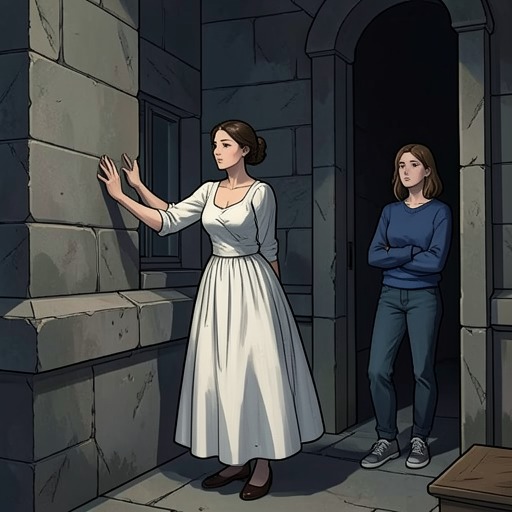
After the wake and cremation, Bea takes the notebook to her childhood room and holds it before opening it. She thinks of the spring she spent there with Ángela, when her own difficulties had seemed consuming but now feel small beside her mother’s death. She also recognizes a complicated consequence of her return home: the painful events that brought her back had given her time with Ángela and with the rest of the family. Bea connects that gratitude to Ángela’s belief that something good can sometimes emerge from painful circumstances and mistakes.
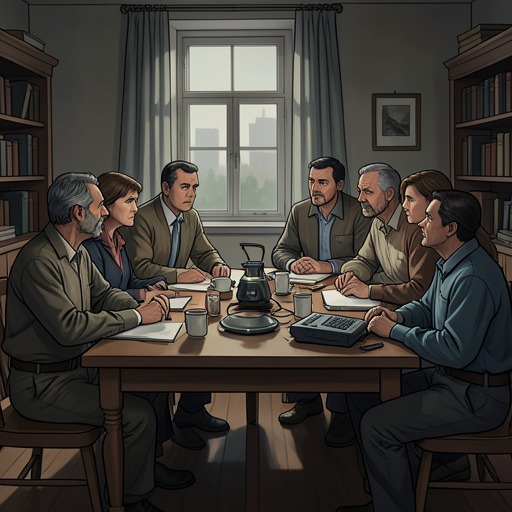
After reading alone for a time, Bea gathers the family in the living room. Bea’s father, Débora, Irene, León, Fin, and Jacobo take places on the sofa and chairs; Teo joins them with a child in his arms. Bea explains that the notebook is for all of them, not just her, and asks whether they want her to read the first note. The movement from bedroom to living room changes the notebook’s role: a keepsake held by one grieving daughter becomes a text encountered together, with each note returning Ángela’s attention to a different person.
Notes shaped for their recipients
The note for Bea’s father starts from an ordinary domestic change. Ángela observes that he has learned to cook and connects that skill to the food she will no longer bring when she cannot see patients. She also offers him a small way to bear her absence: to think of the months they spent together, four each year, rather than the loss as an undivided span. The advice does not undo the separation; it gives him a familiar measure by which to approach it.
Débora’s note is more searching. Ángela says she has always known that Débora inherited her gift, even as her daughter tried to conceal or evade it while looking for her place through new studies and jobs. She does not demand that Débora continue the consultation work, acknowledging how demanding it is, and makes clear that simply knowing about the gift is enough. At the same time, the note affirms Débora’s photography: Ángela praises a photograph of Teo and the child and treats art as a way of empathizing with others and giving form to pain. If Débora ever wants to help people as her mother did, the consultation is hers. The note offers an inheritance without turning it into an obligation.
León’s note folds family approval into a joke about domestic arrangements. Ángela says that the family likes the civil guard and hopes the relationship lasts, while making clear that León need not move in with him; he might simply make a better flatmate than his father. León smiles, and Jacobo embraces him. The civil guard is moved to tears and immediately worries that his remark might offend Jonás. The notebook’s humor does not sit outside the family’s grief: it briefly gives them a way to laugh together, while making visible the relationships its advice recognizes.
Fin’s note is bluntly encouraging, telling him that death should not keep him from living. Its confidence collides with the family’s immediate experience. They have just lost Ángela and feel emptied by her death, so they cannot agree with the note’s apparent lightness; a heavy silence follows. The response reveals a limit as well as a strength of the notebook: a message written for one recipient cannot dictate how everyone else experiences grief. Its words can be carried into the room, but they do not make the loss feel small.
Irene’s note directs her attention toward Fin. Ángela calls him a champion on the motorcycle and a good, intelligent teenager, then reminds Irene that he still needs her more than she realizes. The instruction is concise, but its placement gives it force: amid the family’s mourning, the notebook asks a living mother to listen to her son and remain present to his needs.
Bea’s own note turns to the sisters’ relationships. Ángela says she might have asked Bea and her sisters to make peace with one another, but believes her death will already have served that purpose. The note refers to a theatrical device in which a god resolves a problem; León supplies the term, and the exchange briefly turns sorrow into recognition of Ángela’s knowing humor. The passage frames reconciliation as something the family has already begun, rather than a command that can be postponed until later.
A family testament that cannot replace its author
The notes work through particular details—cooking, the four months Bea’s father shared with Ángela, Débora’s photographs, León’s partner, Fin’s motorcycle, and Irene’s attentiveness to her son—rather than offering one general account of how to mourn. Their differences preserve the sense that Ángela addressed each person individually. Together, however, they also make a shared portrait: a mother who notices what her family can do, where they struggle, and what they may need next.
That portrait does not turn the notebook into a substitute for Ángela. Her family’s reaction to Fin’s note makes the distinction especially clear: the written instruction remains present, but the people hearing it are still overwhelmed by the death it cannot reverse. Instead, the red cover and its scattered messages give grief a form the family can hold, read, question, and share. The notebook’s movement from Bea’s hands to the gathered family makes remembrance an action between them, while its personal counsel points beyond the reading toward the lives they must continue without its writer.